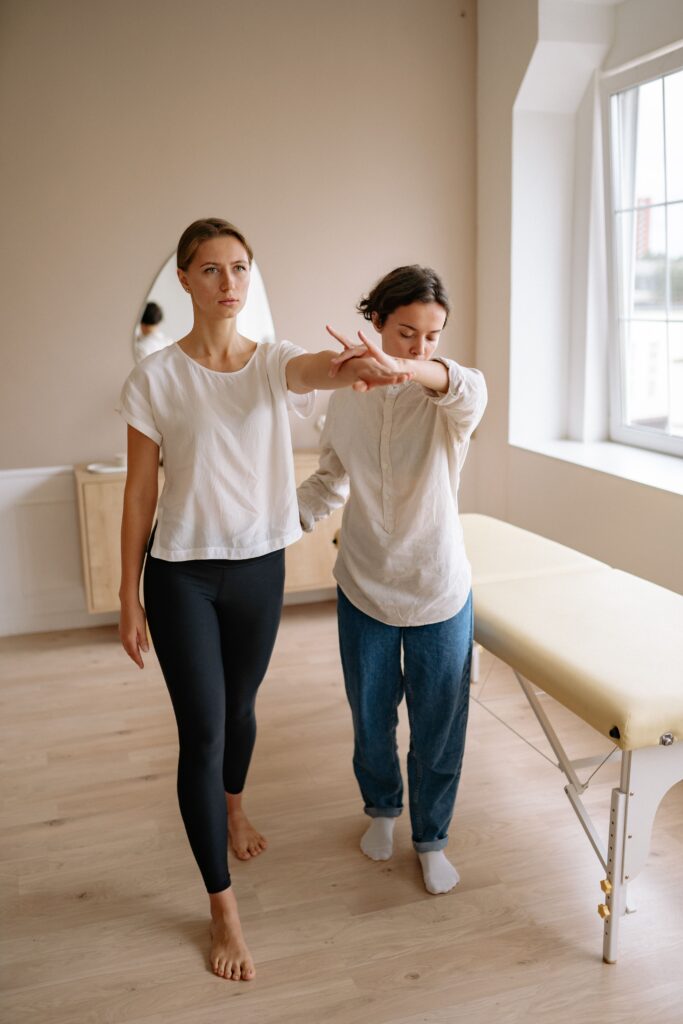
Balance changes are one of the most common and most frustrating parts of living with MS. The good news is that balance is a skill, and like any skill, it responds to practice. This article shares practical, evidence-based tips to help you feel steadier on your feet, reduce your fall risk, and move through daily life with more confidence.
That moment when you reach for something on a high shelf and suddenly feel your whole body sway, or when a small step off a kerb feels like a bigger deal than it used to, if you have MS, you’ll know exactly what we mean. Balance problems are one of the most common symptoms, affecting around half of people with MS over any given six months.
The reassuring news is that balance isn’t fixed. It’s a skill your brain and body can rebuild with the right kind of practice. Research consistently shows that targeted balance exercises can reduce falls, improve walking, and help you feel more confident in everyday activities.
This article brings together practical, evidence-informed strategies you can use at home, along with guidance on when to bring in extra help.
Key Takeaways
- You’ll understand why MS affects balance and coordination
- You’ll learn specific exercises shown to help in research
- You’ll know how to make your home safer without overhauling everything
- You’ll discover when mobility aids are a smart choice, not a last resort
- You’ll understand when to seek input from a physiotherapist
Why MS Affects Balance
Balance relies on three systems working together: your inner ear (which senses movement), your vision, and your body’s sense of where it is in space (called proprioception). MS can affect any or all of these, especially when lesions occur in the brainstem or cerebellum — the parts of the brain most involved in coordination.
Add in fatigue, muscle weakness, numbness in the feet, and occasionally vision changes, and you have several reasons why balance can feel unreliable. The encouraging part is that research has shown the brain is highly adaptable, and specific training can genuinely rewire these pathways.
Everyday Tips to Improve Balance
Practise standing tall. Good posture: shoulders back, eyes forward, and weight through the heels, is the foundation of balance. Practise this at the kitchen bench while the kettle boils.
Challenge yourself safely. Try standing on one leg while holding the bench, or walking heel-to-toe along a line on the floor. Always have something nearby to grab.
Use both sensory and motor training. Research shows exercises that challenge your senses (like standing on a cushion or with eyes closed, near support) alongside movement training work better than movement alone.
Build core strength. Your abdominal muscles are like a tree trunk, the stronger they are, the steadier everything else. Seated exercises, gentle Pilates, or a physio-guided core program can all help.
Incorporate eye-movement exercises. Following a moving finger with your eyes, then turning your head while keeping your gaze fixed, can help retrain the inner-ear and eye coordination that MS sometimes disrupts. A physiotherapist can teach you a tailored set.
Move in different directions. Daily life isn’t just walking forward. Practise side-stepping, stepping backwards, and turning, the movements that most often catch people out.
Making Your Home Safer
Small changes reduce big risks:
- Remove loose rugs or secure them with non-slip backing
- Add a nightlight in the hallway and bathroom
- Use grab rails in the shower and beside the toilet
- Keep a clear path in the rooms you use most
- Store everyday items at waist height to avoid reaching and stooping
- Wear shoes with good grip indoors, not socks alone
In homes with verandahs, steps, and uneven paths, take extra care outdoors, especially in the wet or early morning dew.
When to Use Mobility Aids
Walking sticks, hiking poles, and walkers are tools, not defeats. A well-chosen aid lets you walk further, more safely, with less fatigue, which often means more independence, not less.
If you’re unsure what’s right, an occupational therapist or physiotherapist can assess what would suit you. In Australia, the NDIS may help cover the cost of equipment and assessments for eligible participants.
When to Get Extra Help
Speak with your GP, MS nurse, or neurologist if:
- You’ve had a fall, even a small one
- You feel dizzy, especially with head movements
- Your balance has noticeably worsened recently
- You’re avoiding activities because of fear of falling
A physiotherapist, particularly one with neurological experience, can design a program tailored to you. Telehealth physiotherapy is increasingly available for regional Australians and can be a great way to start. Research shows that longer, more intensive, task-specific sessions (generally 40 minutes or more) deliver the best results, so commit to the program your physio designs rather than trying to shortcut it.
Summary
Balance problems are common in MS, but they’re not fixed. Consistent, targeted practice, especially exercises that challenge both your senses and your movement, can genuinely improve how steady you feel. Make your home safer, don’t shy away from mobility aids if they help, and lean on a physiotherapist for guidance. Small changes, practised regularly, add up to more confidence in the life you want to live.
FAQs
How often should I do balance exercises? Most research points to several sessions per week, for at least 20–40 minutes each. Consistency matters more than intensity.
Is it safe to exercise alone? For many exercises, yes as long as you have a sturdy surface nearby. For more challenging exercises, work with a physiotherapist first, then practise at home.
Can yoga or tai chi help? Yes. Both have evidence supporting improved balance, flexibility, and confidence in MS. Look for gentle, beginner-friendly classes, or modified programs online.
Will I need a mobility aid forever if I start using one? Not necessarily. Some people use aids for specific situations (outdoors, when fatigued, on uneven ground) and not others. Aids can be part-time tools.
How do I find a physiotherapist in a regional area? Ask your GP or MS nurse for a referral. Telehealth physiotherapy is now widely available and can be a great option for ongoing sessions between in-person visits.
References
- Corrini, C., Gervasoni, E., Perini, G., et al. (2023). Mobility and balance rehabilitation in multiple sclerosis: A systematic review and dose-response meta-analysis. Multiple Sclerosis and Related Disorders, 69, 104424.
- Hebert, J. R., Corboy, J. R., Manago, M. M., & Schenkman, M. (2018). Efficacy of balance and eye-movement exercises for persons with multiple sclerosis (BEEMS). Neurology, 90(9), e797–e807.
- Cameron, M. H., & Nilsagard, Y. (2018). Balance, gait, and falls in multiple sclerosis. Handbook of Clinical Neurology, 159, 237–250.
- Gunn, H., Markevics, S., Haas, B., Marsden, J., & Freeman, J. (2015). Systematic review: The effectiveness of interventions to reduce falls and improve balance in adults with multiple sclerosis. Archives of Physical Medicine and Rehabilitation, 96(10), 1898–1912.
- Cattaneo, D., Jonsdottir, J., Zocchi, M., & Regola, A. (2007). Effects of balance exercises on people with multiple sclerosis: A pilot study. Clinical Rehabilitation, 21(9), 771–781.
- Carling, A., Forsberg, A., & Nilsagård, Y. (2018). Falls in people with multiple sclerosis: Experiences of 115 fall situations. Clinical Rehabilitation, 32(4), 526–535.