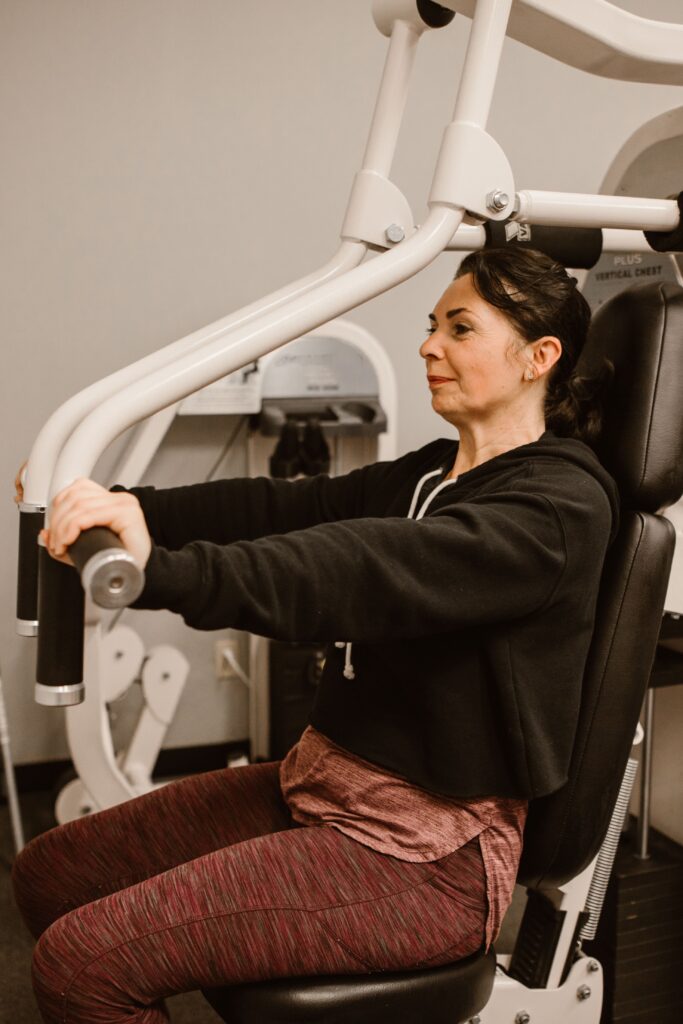
If you have MS, you may have been advised to rest and avoid overexertion. Research suggests that regular, deliberate strength training is also helpful. Strength training, sometimes called resistance training, is one of the most studied non-drug approaches for MS, and its effects extend beyond muscle size.
Stronger muscles are associated with steadier walking, easier stair climbing, better balance, and more energy for daily tasks. For many people with MS, strength training is also linked to reduced fatigue and improved mood.
This article looks at how strength training works, what the research has found, and practical ways to start at any level of ability.
Key Takeaways
- Why MS causes muscle weakness and how training can help
- The benefits of strength training that are supported by research
- Simple, safe exercises suitable for beginners
- How to pace your training and avoid overexertion
- When a physiotherapist can help with your plan
Why MS Affects Your Muscles
Muscle weakness in MS usually comes from the nerve signals that control the muscles, rather than from the muscles themselves. When MS damages the protective coating around nerves, messages from the brain to the muscles can slow down or become less clear.
Over time this can create a cycle. Weaker signals lead to less use, smaller muscles, and weaker signals again. Fatigue can add to this by reducing activity further. Research indicates that strength training can interrupt this cycle. Studies show that people with MS can build muscle in a similar way to other people, with reported gains of around 20% to 40% after a 12-week program.
What the Research Shows
Studies over the past two decades have consistently found that strength training improves muscle strength, walking ability, and quality of life for people with MS. A systematic review reported that resistance training led to meaningful improvements in leg strength, which were associated with easier walking and a lower risk of falls.
Other research has found reduced perceived fatigue, improved mood, and lower rates of depression after structured strength programs. Some of these benefits appear to last. One study found that improvements remained 12 weeks after participants had stopped their formal program.
How Strength Training Helps
Easier walking. Leg muscle strength is closely linked to walking speed, balance, and independence.
Reduced fatigue. Stronger muscles use less effort for everyday tasks, which can make daily life less tiring.
Better balance. Strong core and leg muscles support the body’s balance system, which can reduce the risk of falls.
Improved mood. Exercise is associated with the release of endorphins and a sense of achievement, both of which may help with MS-related depression and anxiety.
Bone health. MS can increase the risk of osteoporosis, partly through reduced activity. Strength training helps maintain bone density.
Greater independence. Everyday tasks, such as carrying shopping or getting out of a chair, can become easier.
Practical Ways to Start
Start with bodyweight. A gym is not necessary. Sit-to-stand from a sturdy chair, wall push-ups, calf raises at the kitchen bench, and bridges on the floor are all useful starting points.
Use light weights or resistance bands. These are inexpensive, easy to store, and allow gradual progress. Tins of food can be used as beginner dumbbells if you do not have weights.
Focus on the big movements. Exercises that work larger muscle groups, such as squats or sit-to-stands, wall push-ups, and rows with a resistance band, tend to give the most benefit for the time spent.
Train two to three times a week. Research suggests this frequency provides good results without overtraining. Leave at least one day between sessions that work the same muscle group.
Progress gradually. Aim to build up over time with more repetitions, more sets, or slightly heavier weights. Small, consistent progress tends to work better than sudden increases.
Cool down and stretch. Gentle stretching after a session may help with spasticity and soreness.
Pacing and Safety
MS adds some particular considerations. Heat sensitivity means it can help to exercise in a cool room, keep water nearby, and choose morning sessions in summer. Fatigue means that training earlier in the day, when energy is often higher, may be easier.
A useful guide is how you feel afterwards. A suitable session may leave you tired but no worse, or better, the next day. If you feel noticeably worse for several days afterwards, the session was likely too intense, and it can help to reduce the load rather than the frequency.
If you have significant weakness on one side, balance problems, or have not exercised for a long time, it is worth seeing a physiotherapist with neurological experience before starting. They can design a program suited to you. This is often covered in part through a GP Management Plan, or through the NDIS for eligible participants.
Telehealth physiotherapy is now widely available and can be a practical option for people in regional Australia. Many physiotherapists will design a program, watch you try it over video, and adjust it as you progress.
When Progress Stalls
Muscles adapt to what they are regularly asked to do. If your exercises stop feeling challenging, this is usually a sign to progress, for example with more repetitions, a slower tempo, or a little more resistance. Progress can look different from day to day with MS. Some weeks may suit pushing a little further, and others may suit maintaining what you have. Both are worthwhile.
Summary
Strength training is one of the most studied non-drug approaches for living well with MS. Research links it to increased muscle strength, reduced fatigue, better balance and mood, and greater independence over time. It does not require a gym, specialised equipment, or a large time commitment. Two or three short sessions a week can make a noticeable difference.
A practical approach is to start small, stay consistent, and consider asking a physiotherapist to tailor a program to your needs.
FAQs
Is it safe to lift weights with MS? Research consistently indicates that strength training is safe and effective for people with MS across a wide range of ability levels.
Will exercising make my MS worse? Current evidence does not show that exercise triggers relapses or speeds up progression. Some research suggests it may help slow progression.
What if I use a wheelchair or have significant weakness? Strength training can still be beneficial. Seated exercises, resistance bands, and upper-body work all count. A physiotherapist can adapt a program to any level of mobility.
How soon will I notice results? Many people feel stronger within 4 to 6 weeks and see measurable gains within 8 to 12 weeks. Everyday tasks often feel easier before any visible change in muscle size.
Should I exercise if I am fatigued? Short, gentle sessions may reduce fatigue over time. During an active relapse or when feeling unwell, rest is appropriate, and it can help to check in with your MS team if you are unsure.
References
- Kjølhede, T., Vissing, K., & Dalgas, U. (2012). Multiple sclerosis and progressive resistance training: A systematic review. Multiple Sclerosis Journal, 18(9), 1215–1228.
- Andreu-Caravaca, L., Ramos-Campo, D. J., Chung, L. H., et al. (2024). Is resistance training an option to improve functionality and muscle strength in middle-aged people with multiple sclerosis? A systematic review and meta-analysis. Journal of Clinical Medicine, 13(5), 1378.
- Dalgas, U., Stenager, E., Jakobsen, J., et al. (2009). Resistance training improves muscle strength and functional capacity in multiple sclerosis. Neurology, 73(18), 1478–1484.
- Amatya, B., Khan, F., & Galea, M. (2019). Rehabilitation for people with multiple sclerosis: An overview of Cochrane reviews. Cochrane Database of Systematic Reviews, 1, CD012732.
- Kjølhede, T., Dalgas, U., Gade, A. B., et al. (2015). Progressive resistance training in MS: A randomized controlled trial. Multiple Sclerosis Journal, 21(5), 599–611.
- Sabapathy, N. M., Minahan, C. L., Turner, G. T., & Broadley, S. A. (2024). The therapeutic potential of exercise for improving mobility in multiple sclerosis. Frontiers in Physiology, 15, 1477431.